An employee can no longer access their files, an administrator account shows unusual activity, or a security system reports that a server may have been attacked. At that point, it is often unclear exactly what has happened. Yet decisions made in the first few hours can determine the consequences. Should a system be shut down immediately? Which other systems might be affected? And who is authorised to decide that a business-critical application must temporarily be taken out of service?
Incident response is about handling situations like these in an organised way. It involves not only technical measures but also assigning responsibilities, weighing the impact on business operations and carrying out recovery carefully.
From security alert to incident
Security systems continually record events. A failed sign-in, a suspicious process or an unusual network connection may indicate an attack, but it may also have a legitimate explanation. Incident response therefore begins by assessing what has actually been observed, which systems and accounts are involved, and whether there are signs of unauthorised access, data loss or disruption.
Not every alert calls for the same response. Suspicious activity on a single workstation may require no more than further investigation, while indications that an attacker has obtained administrative privileges may demand immediate intervention. The aim is to distinguish quickly between a harmless event, a security issue requiring attention and an incident where further damage must be prevented.
The connection with security monitoring matters here. Monitoring helps identify and assess anomalies; incident response ensures that appropriate measures are taken when a threat is suspected or confirmed.
Preparation determines how quickly an organisation can act
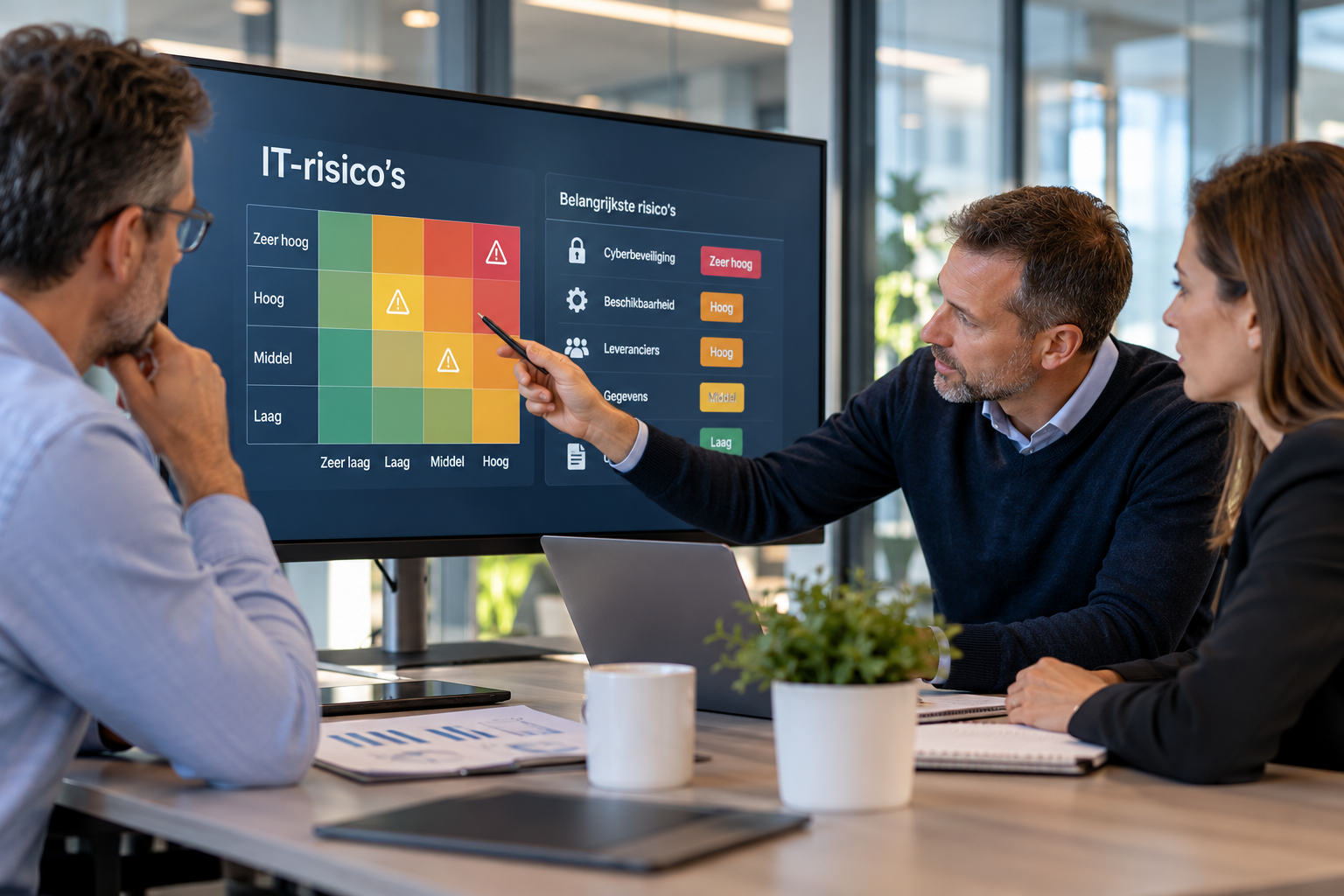
When an incident occurs, there is usually little time to work out responsibilities and procedures. Yet these organisational questions are particularly important. Who can be reached outside office hours? Who has the necessary administrative privileges? Which systems are essential to business operations? And who may decide that a production process must be temporarily stopped?
An organisation that has answered these questions in advance can act more quickly and with greater focus. Four elements are particularly important.
Clear responsibilities
— Define who assesses alerts, implements technical measures and makes decisions affecting business processes.Understanding of critical systems
— Know which applications, servers, connections and data are essential to the organisation.Availability and escalation
— Agree who must be informed, when an issue should be escalated and how to respond outside office hours.Recovery arrangements
— Have reliable backups, recovery procedures and the resources needed to restore systems to service in a controlled manner.
An incident response plan does not need to be complicated, but it must remain usable when normal ways of working are under pressure. Contact details, authorities and recovery arrangements must therefore be kept up to date and checked regularly.
From detection to containment and recovery
A security incident rarely unfolds exactly as anticipated. Nevertheless, a consistent approach helps ensure that important steps are not overlooked and that progress can be monitored.
Detect and assess
— Investigate what happened, which systems may be involved and how urgent the situation is.Contain and control
— Take measures to prevent further spread, unauthorised access or additional damage.Investigate and recover
— Establish the cause, end unwanted access and restore systems in a controlled manner.Review and improve
— Record what happened, which measures worked and what improvements are needed.
In practice, these steps often overlap. While the first systems are being secured, an investigation may reveal that other parts of the IT environment are also affected. The approach must therefore be adaptable as new information emerges. At the same time, it is important to document the measures taken and the findings, so that it remains clear what has changed and what information is available for further investigation.
In practice: a suspicious administrator account
An administrator account shows activity outside normal operations
An organisation receives a security alert about an administrator account being used outside normal working hours. Shortly afterwards, changes to access rights are recorded and sign-in attempts are made on several servers. The activity could have come from an administrator carrying out maintenance, but because the changes do not match scheduled work, the responsible IT specialist is contacted immediately.
The initial assessment establishes that the administrator concerned did not carry out these activities. The account is blocked, active sessions are terminated and the affected systems are investigated. Checks are also made to determine whether other accounts have been created or permissions changed.
The team then establishes which systems were actually accessed and what recovery measures are required. The affected services are returned to normal operation only when there is sufficient assurance that the unauthorised access has ended. How quickly the incident is recognised, assessed and escalated helps determine the extent of its consequences.
This is an illustrative example, not a description of a specific client incident.
Acting quickly without losing sight of business operations
When an attack is suspected, it may be necessary to isolate a device, block an account or temporarily disable a network connection. This can prevent further damage, but such measures may also disrupt business processes. Isolating a workstation generally has different consequences from shutting down a server used for production planning or financial administration.
Agreements must therefore be made in advance about the authority of IT management and security specialists. An acute threat may require immediate action, while measures with major consequences for business operations should, wherever possible, be coordinated with the organisation. Incident response therefore requires not only technical expertise but also an understanding of business processes and their dependencies.
The same applies to communication during an incident. Management needs to know which processes are at risk, employees need to understand whether they can continue working safely, and suppliers may be needed for investigation or recovery. Where personal data may be involved, the organisation must also assess whether notification obligations under the GDPR or other applicable rules apply. It is important to distinguish established facts from suspicions and questions that are still being investigated.
Stopping an attack is not the same as recovering
Ending unauthorised access does not mean that the organisation can safely resume work. Equally, restoring a backup does not automatically mean that the cause of the incident has been removed.
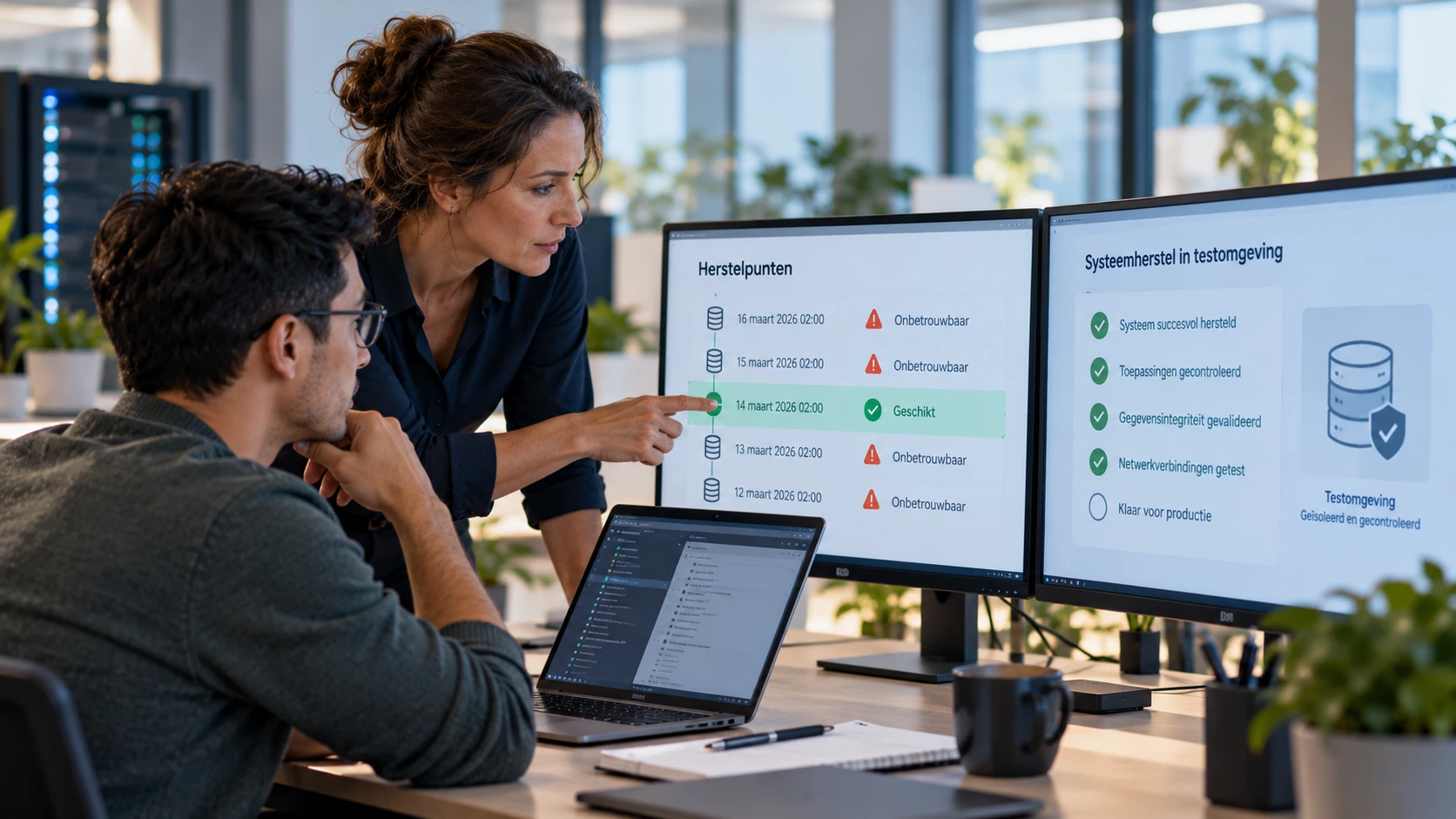
Incident response focuses on bringing the threat under control: securing accounts, investigating suspicious changes and preventing further damage. Recovery focuses on responsibly restoring the availability of systems, applications and data. This requires sufficient assurance that the recovery environment is trustworthy and that an attacker cannot regain access.
The two activities are closely connected. If systems are restored too quickly without investigating the cause, the incident may recur. But a prolonged investigation without clear recovery priorities can also have serious consequences for business operations. A sound approach therefore considers both security and continuity.
Cooperation and responsibilities
Not every organisation has its own incident response team. Many work with an IT service provider, security specialist or external incident response company. This can work well, provided it is clear in advance who conducts the initial investigation, when additional expertise is brought in and who coordinates technical measures and recovery.
It must also be clear where an external party's responsibility ends. A specialist can assess technical risks and recommend measures, but decisions about business continuity, communication and acceptance of residual risks require the organisation's own involvement. That cooperation therefore starts not during the incident, but when day-to-day IT management is organised.
From incident to improvement
Once systems are working again, there is a temptation to close the incident and return to normal operations. Yet the period after recovery is particularly important. A review should establish how the incident could arise, what signals were available and whether the response worked effectively.
Perhaps an administrator account had excessive privileges, monitoring was missing from an important server, or it was unclear who should be available outside office hours. The findings must lead to concrete improvements, such as revised access rights, additional monitoring, changes to network segmentation or better recovery procedures. Even an incident with limited consequences can provide valuable insight into the organisation's resilience.
Incident response is part of responsible IT management
No security measure can guarantee that an incident will never occur. Organisations must therefore invest not only in preventing and recognising attacks, but also in preparing for situations where security measures fall short.
That requires an understanding of the IT environment, clear responsibilities, expert follow-up and reliable recovery arrangements. The difference between a manageable security incident and a prolonged business disruption is determined not only by the attack itself, but also by how the organisation responds.